




News Global Market брухт 2629 10 October 2025
The EC's Action Plan for Steel and Metals leaves scrap exports open, maintaining competition in the market
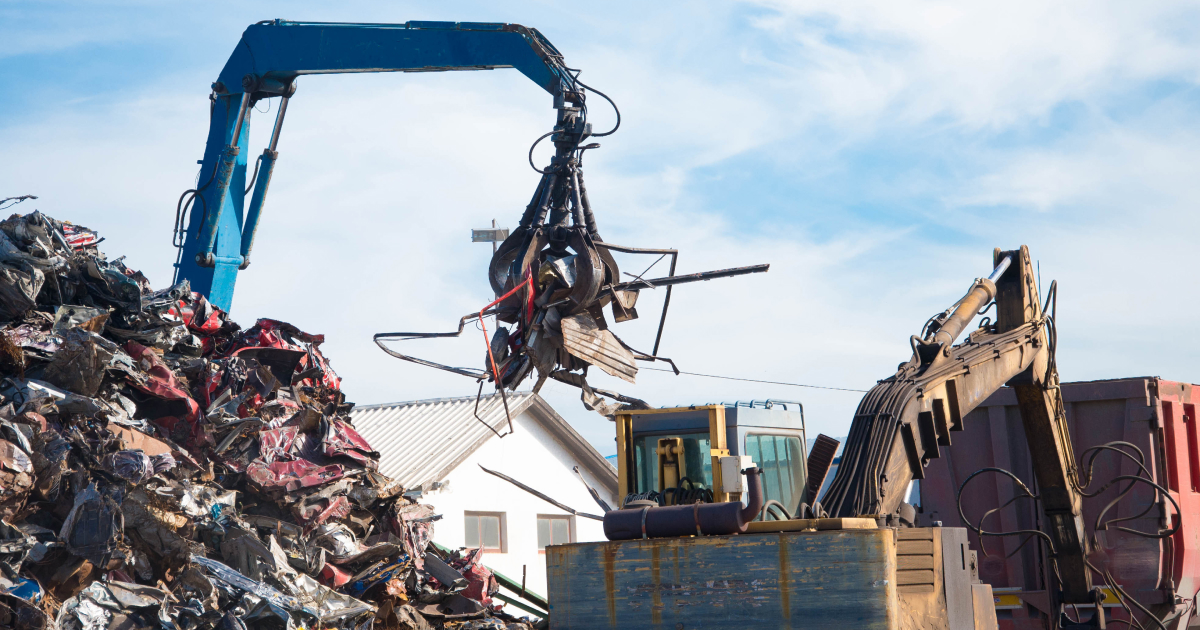
The first package of measures announced yesterday as part of the European Commission’s Steel and Metals Action Plan (SMAP) has been welcomed by European and German steel producers. German recycling companies have welcomed the EU’s decision not to impose restrictions on exports of secondary metals.
German industry associations bvse – Recycling Germany, BDSV, and VDM, together with Recycling Europe (formerly EuRIC), generally supported the EU’s intention to protect the steel industry. They called the “buy European” approach in public procurement and private steel contracts understandable in light of large taxpayer-funded investments in infrastructure and defense. At the same time, recyclers emphasize that a strict CBAM, the priority of European products, and the acceleration of the transition to carbon neutrality must be accompanied by efforts by the industry itself to increase competitiveness.
«It must be clear to all involved that the ‘unfair’ regimes of other countries are not being affected by the reduced import quotas and higher duties. Rather, it is directly the domestic steel processing companies and indirectly the European consumers who are paying for the protection of a basic materials industry,» emphasized BDSV CEO Guido Lipinski.
Another risk is selective protection. Despite the general strengthening of barriers, imports of semi-finished products—slabs and billets—are exempt from quotas and tariffs. According to the associations, the policy of restricting market access with state support for certain segments inevitably creates a “Pandora’s box” effect: other industries will seek protection, from the automotive and chemical industries to energy and construction.
Despite their critical comments, processors called the decision not to restrict scrap exports an important victory for common sense.
«This is an important milestone for reason and facts for an efficient, important, but unfortunately politically under-recognized sector of the German and European economy. The introduction of market restrictions without any factual justification, based solely on the interests of a very narrow clientele, would have severely damaged our members’ trust in the EU institutions,» emphasized Sebastian Will, member of the bvse board and vice president of Recycling Europe.
According to him, more than 80% of the secondary metals of the association members are sold within the EU, so balanced competition is critical for innovation and price stability.
The bvse, BDSV, and VDM associations represent around 5,000 companies in Germany’s recycling industry, which operate without subsidies and provide more than 65,000 jobs. The European organization Recycling Europe brings together the interests of more than 20,000 companies of all sizes with more than 350,000 employees. Recyclers confirm their willingness to support the decarbonization of steel, but insist that competitiveness, not administrative barriers, should be the basis of the EU’s new industrial policy.
In the first half of 2025, the European Union reduced its exports of ferrous scrap to third countries by 0.9% compared to the same period in 2024, to 8.11 million tons. About 70% of total exports went to Turkey – 5.57 million tons (+15.3% y/y). The largest scrap exporters were the Netherlands (1.88 million tons, +43% y/y), Belgium (1.23 million tons, -4.4% y/y), and Poland (630,670 tons, +8.6% y/y).
-
Opinions Industry steel consumption
13 July 2026
26 July 2026
24 July 2026
24 July 2026