





News Global Market protective measures 1787 27 May 2026
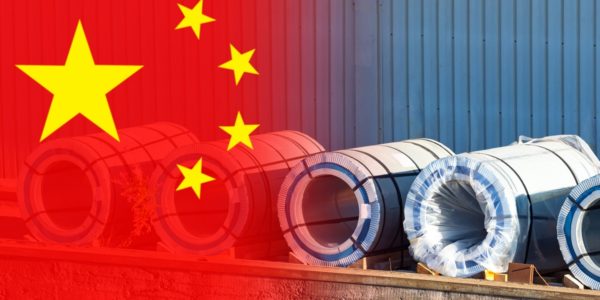
Although the document does not explicitly mention China, it implicitly refers to that country
Five EU countries—France, Italy, Spain, the Netherlands, and Lithuania—are calling for the bloc to strengthen its trade measures to provide more effective protection against cheap imports that threaten EU industry, with Chinese goods in mind. This was reported by Reuters.
The initiative came ahead of internal debates within the European Commission regarding relations with China, scheduled for May 29. The EU seeks to resolve the issue of trade imbalances, which are exacerbating tensions.
In a document dated May 22, which the agency reviewed, five EU member states note that current measures focused on Chinese exports are characterized by long delays, a narrow list of goods, and the possibility of easy circumvention.
The letter mentions Indonesian stainless steel and American biodiesel, but not China. However, three-quarters of all current EU anti-dumping and anti-subsidy investigations concern China. Last year, the bloc’s trade deficit with China rose to €360 billion.
As stated in the document, the EC could expand the scope of anti-dumping and anti-subsidy investigations so that they are not limited to a narrow range of products, and make broader use of safeguards to restrict imports across entire sectors. It also proposes setting higher thresholds for local content and value added in third countries through which goods subject to duties are transshipped.
In addition, the EU could apply anti-subsidy duties to companies, rather than just to specific goods from certain countries.
As a final proposal, the document suggests creating a new instrument to limit excessive dependence on supplies from individual foreign countries.
The European Commission plans to review by the third quarter how to accelerate trade measures and assess whether new ones are needed, for example, to combat excess capacity.
As a reminder, on May 19, the European Parliament approved new measures to protect the EU steel market. The relevant regulation introduces lower import quotas for steel—duty-free import volumes are limited to 18.3 million tons per year (a 47% reduction compared to the 2024 quotas). In addition, a 50% tariff (instead of the current 25%) will apply to imports exceeding the quotas and to steel products not covered by the quotas.
-

02 July 2026
09 July 2026
09 July 2026
09 July 2026