
News Companies ArcelorMittal 3559 12 January 2026
Investments exceeding PLN 200 million will reduce gas consumption and CO2 emissions
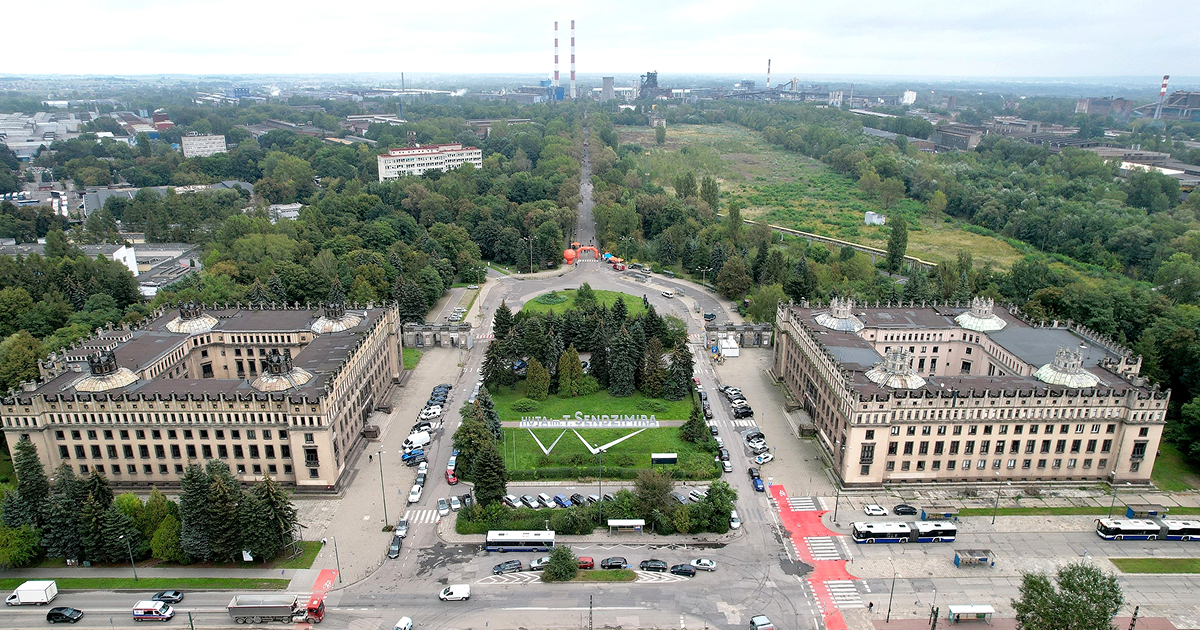
Global mining and steel company ArcelorMittal is launching a large-scale investment in Krakow, Poland, which includes the construction of a new boiler house, the installation of a closed-loop heat recovery system, and the construction of a power substation. Once the project is complete, the company’s Krakow division will reduce its natural gas consumption and cut CO2 emissions by 115,000 tons per year, according to a press release.
The investment is in line with the company’s updated production configuration. Currently, the Krakow metallurgical base consists of two processing plants – one of the most modern hot and cold rolling lines in Europe with galvanizing and flat rolling painting lines. To keep these facilities running smoothly, it’s super important to have a steady supply of electricity, heat, and steam from sources that are just right for production needs.
As part of a project worth over PLN 200 million, a new boiler house with two natural gas boilers will be built to supply heat to the hot and cold rolling mills. In addition, the heat currently lost during the cooling of the walking beam furnace on the hot rolling line will be reused thanks to a waste energy recovery system. Currently, the plant irretrievably loses about 12 MW of thermal energy, while after the project is implemented, most of this resource will be returned to the production cycle and the plant’s heating system.
In addition, there are plans to build a new 6 kV electrical substation to distribute electricity between new and existing installations. Overall, the investment will reduce natural gas consumption by more than 2,000 TWh per year. The work is expected to be completed and the facilities commissioned by the end of 2027.
As reported by GMK Center, at the end of 2025, ArcelorMittal completed a large-scale modernization of galvanizing line No. 2 at its plant in Krakow (Poland). The PLN 40 million investment enabled the line to be adapted for the production of steel sheets with a classic zinc coating and a new Optigal alloy based on zinc, magnesium, and aluminum.