
News Global Market залізна руда 120 09 June 2026
Guinean ore is not yet set to replace Brazilian ore in China due to its high alumina content
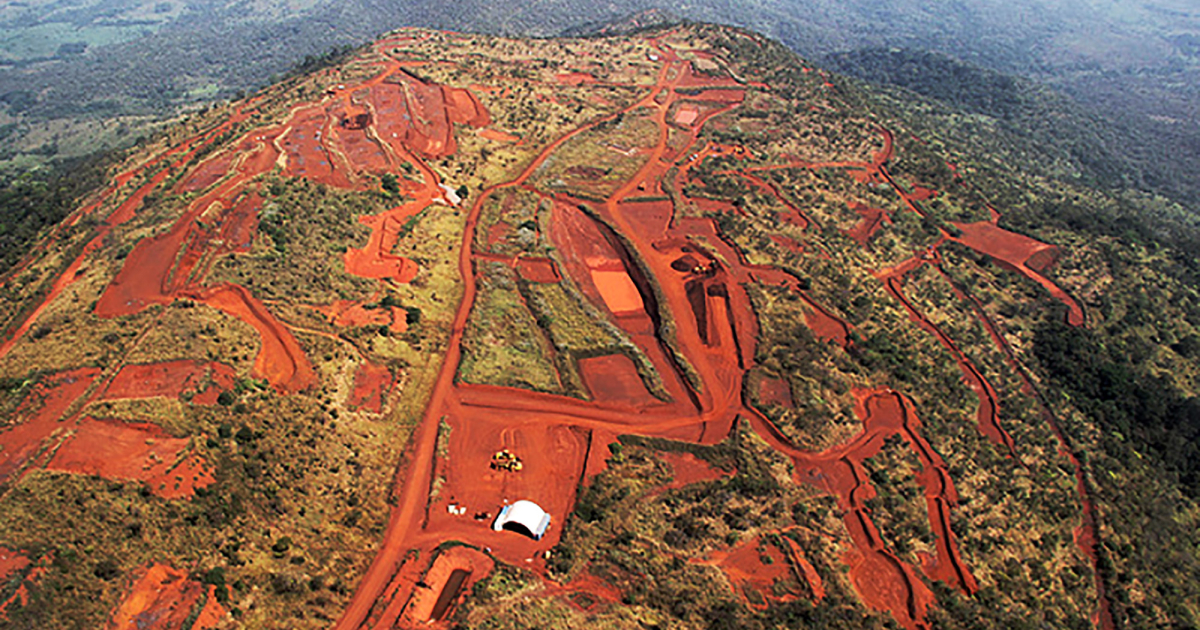
The Simandou iron ore mining project in Guinea (West Africa) has seen a sharp rise in shipment volumes. The first ore-laden vessel set sail for China in November 2025, and by mid-May 2026, total exports had reached around 6 million tonnes. China accounted for more than half of this volume – around 3.2 million tonnes. This was reported by BigMint, citing Mysteel Global.
According to forecasts by Mysteel analysts, once the rainy season in West Africa (July–September) ends, shipments will pick up, and annual shipments this year could exceed 20 million tonnes. This is facilitated by the commissioning of a logistics chain: a 650-kilometre railway and a new terminal at the port of Morebiah with a design capacity of 40 million tonnes per year. Units 3 and 4 are expected to be launched subsequently.
Despite its high iron content (65–66%), Simandu ore cannot currently fully replace Brazilian Carajás fine ore (IOCJ) at Chinese plants. The main obstacle is the high alumina content (2.7% compared to 1.4% in IOCJ), which thickens the slag and reduces smelting efficiency. Furthermore, the Guinean ore requires additional costs for screening.
Due to these technical characteristics, market sentiment is divided:
- Steelmakers in northern and eastern China are cautiously optimistic and are planning only trial purchases.
- Mills in southern China consider the use of this ore to be expensive and complicated, as their equipment is optimised for low alumina content.
- Traders are more optimistic, hoping that the specific composition of the raw material can be balanced through blending.
Activity on the spot market remains limited at present – only a few major steelmaking groups (notably Baowu, Rizhao Steel and Weiqiao) have concluded deals.
The arrival of Simandu ore is not expected to cause a collapse in global prices, as its volumes account for only a fraction of the global market (which stood at 2.61 billion tonnes in 2025). However, the new player will change price dynamics: it will increase pressure on premiums for high quality (particularly for Brazil’s IOCJ) and encourage mills to optimise smelting technologies.
As reported by GMK Center, Simandou is the world’s largest unexplored iron ore deposit, with reserves estimated at a minimum of 3 billion tonnes. The project threatens to further alter the dynamics of the iron ore market, which is already facing an uncertain future in terms of demand. Previously, internal forecasts from some of the world’s largest mining companies indicated that the price of iron ore would fall to $85/t over the next three years, as Simandou in Guinea is set to reach full production capacity within the next two and a half years.